Loading...
Serving Jacksonville, IL and surrounding areas. (217) 271-0278
A sunken slab gets worse every winter. Get your driveway, patio, or garage floor lifted back to level without tearing everything out and starting over.
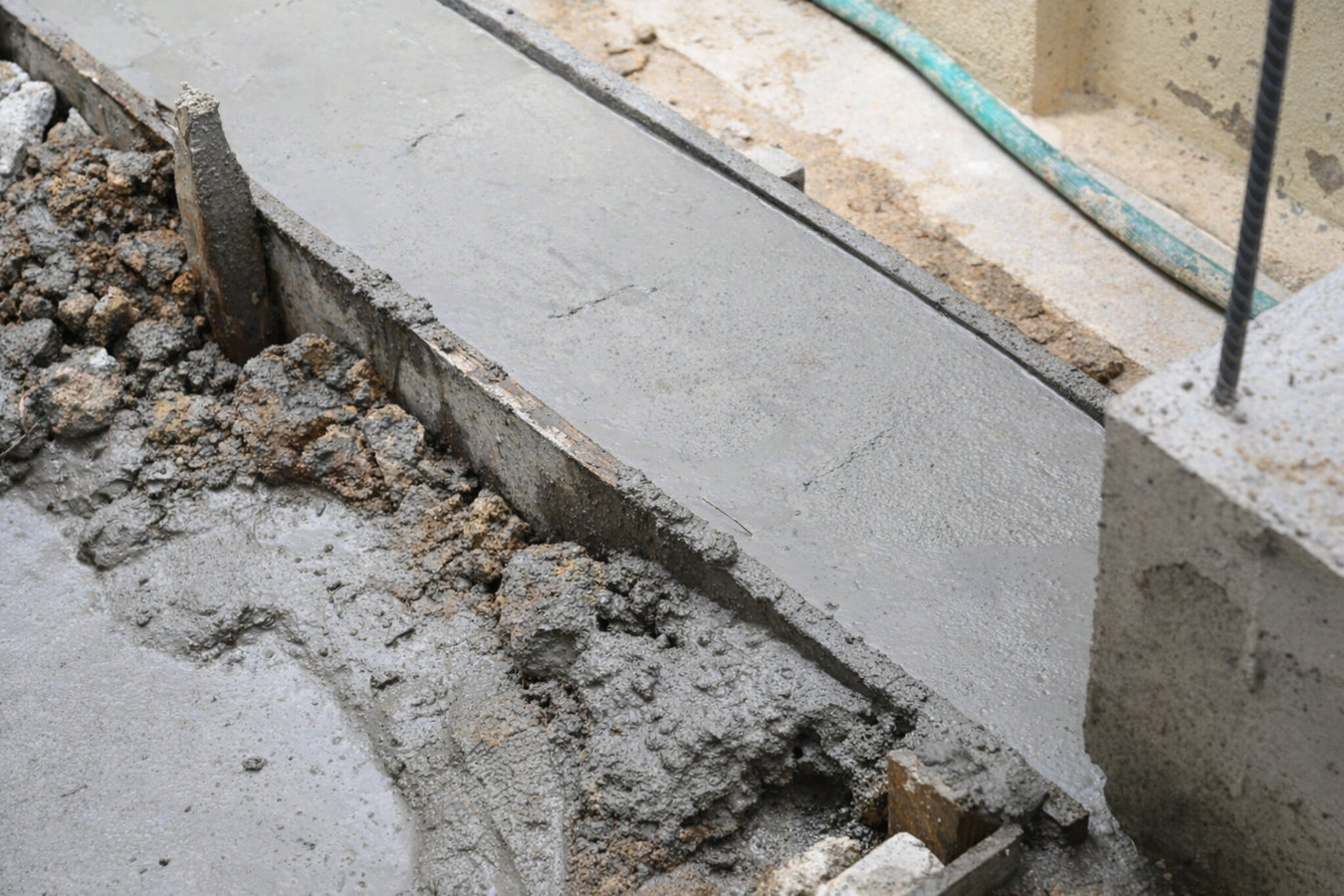
Foundation raising in Jacksonville, IL is the process of lifting a sunken concrete slab back to its original level position by pumping material into the void beneath it - most residential jobs are completed in a single day, and you can walk on the surface the same day the work is done.
In Jacksonville, slabs sink because the clay-heavy soil underneath them shifts. Morgan County clay swells when it gets wet and shrinks when it dries out, and that constant movement gradually creates voids beneath your concrete. Once a void forms, the slab has nothing to rest on and begins to tilt or drop. Addressing the drainage around your home is just as important as the lift itself - if water keeps pooling near the slab edges, the soil will keep moving. For projects where the underlying structure also needs to be rebuilt or reinforced, our slab foundation building service covers that scope.
Stand at one end of your driveway or patio and look down the length of it. If it looks like a ramp where it used to be flat, or water pools in a spot that never collected before, the slab has likely dropped. In Jacksonville, this often happens gradually over several winters and becomes obvious by spring.
When the foundation under your home shifts, the frame shifts with it - and doors and windows are usually the first place you notice. If a door that used to swing freely now drags on the floor or will not latch, that is worth having looked at. This is especially common in Jacksonville's older homes.
Walk the perimeter where your driveway, porch, or patio meets the house. If you can see a gap where the concrete has pulled away from the foundation wall, the slab has moved. That gap also lets water in, which can make the underlying soil problem worse over time.
Straight cracks along a control joint are usually normal. Diagonal cracks that run across the slab at an angle, or cracks that are wider on one end, suggest the slab is moving unevenly. In Jacksonville's clay-heavy soil, these often appear after a dry summer followed by a wet fall.
We handle foundation raising in Jacksonville for driveways, patios, garage floors, porches, steps, and walkways. Every job starts with a proper on-site assessment - we locate the voids, evaluate the slab condition, and recommend the right method before a single hole is drilled. Both mudjacking and foam lifting are available, and we will explain which one fits your specific slab and soil situation. Once the work is done, drill holes are patched and the area is cleaned up.
Foundation raising often connects to other concrete work. For slabs that have dropped because of deeper structural issues, our concrete cutting service can open the slab to allow for drainage or utility repairs beneath it. And when a project needs a full new slab poured after the old one has been removed, our slab foundation building service handles that next step. For authority guidance on concrete standards and foundation repair practices, the American Concrete Institute publishes consumer resources on structural concrete.
For homeowners whose driveway has dropped, tilted, or created a tripping edge at the curb or garage entrance.
For sunken patio sections or walkway slabs that have shifted enough to collect water or create an uneven surface.
For garage slabs that have dropped at the entry or interior, often after moisture has eroded the soil beneath.
For front or back porches and concrete steps that have settled away from the house, creating gaps or uneven landings.
The soil under much of Morgan County contains a significant amount of clay. Clay swells when it absorbs water and shrinks when it dries - and central Illinois gets both. Jacksonville winters are also hard on concrete, with repeated freeze-thaw cycles from November through March that push and pull the soil a little more each year. This is why many homeowners notice their concrete looks worse every spring. Scheduling a foundation raising assessment in early spring, before the ground fully stabilizes, is often the right move.
Jacksonville also has a substantial share of older housing stock - much of it built in the mid-20th century. Concrete from that era was often poured thinner and with less reinforcement than modern slabs. That means the assessment before any lift matters more here than it might elsewhere. We work across the area, including neighborhoods around Jacksonville, IL and out to Beardstown, IL, where the same clay soil conditions apply. The Illinois State Geological Survey has published research on soil behavior in this region that confirms what local contractors see every season.
When you call, we ask a few basic questions - slab type, how much it has sunk, any cracking. This helps us bring the right equipment. Expect a 1-business-day response to your inquiry.
We walk the slab with you, check the extent of settling, and assess where voids are likely located. You get a written estimate covering method, number of holes, and cleanup - no surprises at the end.
The crew drills small holes, pumps material underneath until the slab rises to the correct level, and monitors the lift carefully. Once the slab is up, holes are patched and the area is cleaned. Most jobs are done in a few hours.
We do a final level check before leaving. You can typically walk on the surface the same day and drive on it within 24 hours. We walk you through what to watch for in the weeks after the job.
Free written estimate, no obligation. We respond within 1 business day.
(217) 271-0278Morgan County sits on expansive clay that swells in wet springs and shrinks in dry summers. We have been working in this soil since 2019 and know how to assess void size, slab condition, and drainage together - not just pump material and leave.
A good lift starts with knowing where the voids actually are. We probe and evaluate before drilling a single hole, and we will tell you plainly if the slab is too far gone for raising and replacement makes more financial sense.
If your project requires a permit through the Jacksonville Building Department, we handle that paperwork before any work begins. You get a documented job that will not create problems at resale or with your insurance carrier.
We are not locked into one method. After assessing your slab, soil conditions, and budget, we recommend the approach - traditional mudjacking or foam lifting - that fits your specific situation, not just what the truck happens to carry.
Taken together, these mean you get an honest assessment, the right method for your soil and slab, permits handled if needed, and a crew that has been solving this specific problem in central Illinois since 2019. That combination is what keeps our customers from calling us back for the same sinking slab two years later.
Precise cuts through slabs or walls for drain access, utility runs, or controlled section removal.
Learn MoreNew slab construction when an existing concrete surface is too deteriorated to raise and needs full replacement.
Learn MoreGet your slab assessed and a written estimate in hand before the rush. We schedule within 1 business day and handle the whole job from assessment to cleanup.